Summer brings longer days and abundant grazing opportunities, but it also creates one of the biggest seasonal challenges for producers: heat stress in sheep. While sheep are often considered hardy animals, prolonged exposure to high temperatures and humidity can negatively impact growth, reproduction, feed intake, and overall flock performance.
Heat stress does not just impact sheep during extreme heat waves. Several consecutive days of elevated temperatures combined with humidity can place significant strain on animals. Understanding how sheep respond to heat and implementing management and nutrition strategies can help minimize losses and keep the flock productive throughout the summer months.
What Causes Heat Stress in Sheep?
Heat stress in sheep occurs when they are unable to effectively dissipate body heat and maintain a normal body temperature. Temperature alone does not tell the entire story. Humidity, solar radiation, air movement, breed type, fleece length, and overall animal condition all influence how sheep respond to heat.
According to Susan Schoenian, retired University of Maryland Extension Sheep and Goat Specialist, the temperature at which heat stress begins can vary based on geographic location and environmental conditions. In many areas, sheep begin experiencing heat stress when temperatures reach approximately 75 degrees Fahrenheit and remain elevated for several consecutive days, especially when humidity levels are high.
The temperature humidity index (THI) is likely a better indicator of heat stress in sheep, as it takes into consideration both temperature and humidity. Most animals are tolerant up to about 84 degrees Fahrenheit. However, any temperature exceeding 86 can negatively impact your flock.
Breed also influences heat tolerance. Hair sheep breeds such as Katahdin, St. Croix, and Barbados Blackbelly sheep generally tolerate heat better than many wool breeds because they naturally shed their coats. Dorpers, developed in South Africa, also demonstrate relatively strong heat tolerance.
Interestingly, wool itself can provide protection against temperature extremes. While many assume heavy fleece automatically contributes to overheating, wool acts as insulation against both hot and cold conditions.
Research has shown that sheep carrying approximately one inch of fleece often remain more comfortable than sheep with very short wool because the fibers help buffer sudden temperature changes and dissipate heat. Proper spring shearing allows sufficient wool regrowth to maintain these benefits while helping sheep stay comfortable during summer.
Signs of Heat Stress in Sheep
Early detection is critical when managing heat stress in sheep. Producers should closely observe flock behavior during periods of elevated temperatures.
Common signs include:
- Increased panting or rapid breathing
- Open-mouth breathing
- Excessive drooling
- Reduced feed intake
- Decreased grazing activity
- Lethargy or lack of energy
- Congregating around water sources
- Seeking shade during daylight hours
- Reduced movement across pastures
Many producers notice that sheep graze actively during the early morning hours before retreating to shaded areas as temperatures rise. During periods of extreme heat and humidity, sheep may spend much of the day standing in shade while reducing forage intake.
The reduction in feed intake is one of the most significant consequences of heat stress. As animals consume less forage and fewer nutrients, performance losses quickly follow.
How Heat Stress Impacts Sheep Performance
One of the first consequences of heat stress in sheep is reduced voluntary feed intake. Sheep naturally decrease consumption to reduce metabolic heat production associated with digestion.
Unfortunately, lower intake often means fewer nutrients available to support growth, maintenance, milk production, and reproduction.
For growing lambs, heat stress can slow average daily gain and reduce feed efficiency. Ewes may struggle to maintain body condition during critical reproductive periods. Lactating females may experience reduced milk production, impacting lamb growth and performance.
Pasture quality can also decline during hot, dry periods. As forage matures and becomes less digestible, sheep may have an even harder time meeting nutrient requirements. The combination of lower-quality forage and reduced intake creates a nutritional challenge that requires proactive management.
The Hidden Reproductive Costs of Heat Stress
Perhaps the costliest consequence of heat stress in sheep is its impact on reproductive performance.
Many producers begin preparing for sheep breeding season during the hottest months of the year. Unfortunately, excessive heat can negatively affect both rams and ewes.
Heat stress can temporarily reduce sperm production and sperm quality in rams. Elevated body temperatures may also reduce libido, resulting in fewer successful breedings.
For ewes, heat stress may impact:
- Estrus expression
- Embryo survival
- Fertility
- Early pregnancy maintenance
- Fetal development
These reproductive disruptions can ultimately lead to lower conception rates and fewer lambs born.
Because sperm development occurs weeks before breeding activity, producers should begin managing ram comfort well before the breeding season starts. Shear rams approximately six to seven weeks prior to breeding, including wool around the scrotum, to help maintain appropriate testicular temperature.
During periods of excessive heat, some producers find success by exposing rams and ewes together during cooler evening and nighttime hours rather than during the heat of the day.
Marking harnesses can also help monitor breeding activity and identify potential fertility concerns before they impact the entire breeding season.
Practical Management Strategies to Reduce Heat Stress in Sheep
While weather cannot be controlled, several management practices can help reduce the severity of heat stress in sheep.
Provide Adequate Shade
Shade is one of the simplest and most effective tools available.
Natural shade from trees works well, but portable shade structures, sheds, and barns can also provide relief. Regardless of the source, adequate airflow is essential. Poorly ventilated structures can trap heat and worsen conditions.
If sheep are housed in enclosed facilities, fans can improve air circulation and help remove accumulated heat.
Prioritize Water Access
Water requirements increase significantly during hot weather.
Fresh, clean water should always be available and checked frequently. Locating water sources near shaded areas often encourages greater water consumption.
Water tanks should be cleaned regularly to maintain palatability and prevent reduced intake.
Adjust Handling Schedules
Avoid transporting, sorting, vaccinating, or processing sheep during the hottest part of the day.
When handling is necessary, schedule activities during early morning or evening hours when temperatures are lower.
Monitor Weather Forecasts
Extended forecasts can help producers prepare for heat events before they occur.
Knowing when temperatures are expected to rise allows time to ensure adequate shade, water availability, and nutritional support are in place.
Nutrition’s Role in Managing Heat Stress in Sheep
Nutrition becomes increasingly important as temperatures climb.
Because sheep often consume less feed during periods of heat stress, every bite becomes more valuable. Producers should focus on providing nutrient-dense diets that maximize the utilization of available forage and feed resources.
At a minimum, sheep should have access to a properly balanced vitamin and mineral program. Depending on geographic location, additional supplementation of selenium and other trace minerals may be necessary.
Working with a nutritionist or Extension specialist can help identify regional deficiencies and ensure nutritional requirements are being met.
A complete mineral program becomes especially important when animals are preparing for breeding season or attempting to maintain performance under environmental stress.
Supporting Sheep During Heat Stress with DuraFerm®
BioZyme® Inc., a Saint Joseph, Missouri-based company, developed the DuraFerm® sheep nutrition line to support optimal health, performance, and reproductive success throughout every stage of production. Every DuraFerm product contains AO-Biotics® Amaferm®, BioZyme’s proprietary research-proven precision prebiotic.
“Not only do we offer the most comprehensive vitamin and mineral supplement on the market with 2.5 times the NRC requirements, but the Amaferm increases digestibility, ensuring that your animals are getting more nutrients from every bite of forage they are consuming,” said Sam Silver, BioZyme Senior Manager of Small Ruminant Technical Sales Support. “The combination of supplements and Amaferm gives every animal two great ingredients in every bag.”
DuraFerm® Concept•Aid® Sheep
DuraFerm Concept•Aid Sheep is a free-choice vitamin and mineral supplement for sheep designed to support reproductive success
The formula:
- Supports embryo production and conception using organic trace minerals, including zinc, manganese and selenium.
- Contains elevated vitamin E levels for reproductive tract repair.
- Includes Amaferm, a prebiotic research-proven to enhance digestibility.
These nutrients help support reproductive efficiency, immune function, and overall flock health.
For producers preparing ewes for breeding during summer months, maintaining proper mineral status is especially important as heat stress can place additional demands on the animal.
DuraFerm® Concept•Aid® HEAT® Sheep
For producers battling both heat and insects, DuraFerm Concept•Aid HEAT Sheep is another option in the DuraFerm product line.
DuraFerm Concept•Aid HEAT Sheep is another loose vitamin and mineral supplement for sheep designed to support reproductive success when temperatures are above 70 degrees Fahrenheit.
In addition to the Amaferm and organic trace minerals, it also contains HEAT technology, a combination of essential oils and garlic, to support animals when heat and insects are a challenge. Maintaining a more stable body temperature can help support reproductive performance and overall comfort during hot weather. Garlic acts as a natural insect deterrent, and studies show that it has reduced fly and tick pressure.
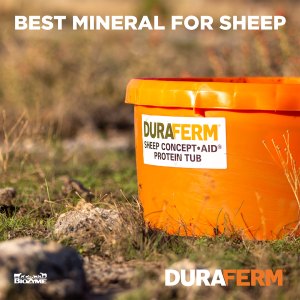
DuraFerm® Concept•Aid® Sheep Protein Tub
If you are in are a drought-stricken area, big country or simply looking for a higher-protein solution, consider the DuraFerm® Concept•Aid® Sheep Protein Tub. This 16-percent natural protein tub contains Concept•Aid in addition to Amaferm, to decrease digestibility, ensuring animals get more nutrients from every bite, while cooling them internally.
The Amaferm Advantage
Amaferm works by enhancing digestibility and increasing nutrient availability from the feed sheep are already consuming – both forage and grain.
During periods of heat stress, reduced feed intake can limit nutrient consumption. Improving digestibility helps sheep extract more value from every pound of forage and feed. Additionally, when digestion is enhanced, that means less internal work, so the animal is actually creating less heat internally, and therefore, more efficiently self-regulating its own temperature. When it is having to work harder at digestion, more heat is created internally, creating a hotter animal both internally and externally.
Research shows Amaferm can support:
- Increased feed intake
- Improved nutrient digestibility
- Enhanced nutrient absorption
- Greater energy availability
- Improved reproductive performance
By helping sheep utilize nutrients more efficiently, Amaferm provides an important nutritional advantage when environmental stress threatens performance.
Protect Your Flock Before Temperatures Rise
Heat stress in sheep can quietly erode performance long before obvious symptoms appear. Reduced feed intake, lower reproductive efficiency, slower growth, and increased maintenance requirements all take a toll on flock productivity.
Fortunately, a proactive approach can make a significant difference. Providing shade, maintaining access to clean water, minimizing handling during hot weather, and implementing a sound nutrition program help sheep remain productive even during challenging summer conditions.
When those management practices are paired with a comprehensive nutrition program like DuraFerm, including the digestive benefits of Amaferm and the seasonal support of DuraFerm Concept•Aid HEAT Sheep, producers can better position their flocks to maintain performance, reproduction, and overall health throughout the heat of summer.
Get Your DuraFerm Mineral Today
It’s not too late to get your flock on the DuraFerm with HEAT technology. DuraFerm, powered by AO-Biotics Amaferm, not only provides the vitamins and minerals your flock needs to thrive, but the Amaferm ensures the ewes and rams get the most nutritional value from every bite of feed and forage.
DuraFerm products are available through the extensive BioZyme dealer network. Locate a dealer near you today. You can also shop online.
Sign up for our newsletter to stay informed about best practices for seasonal sheep nutrition and management.