Spring is a season of renewal for livestock operations, but it also introduces a range of management challenges. Temperatures rise, pastures begin to green up, and production cycles shift. With these changes, sheep and goats face several environmental and nutritional stressors. Heat fluctuations, sudden forage changes, increased parasite pressure, and the demands of reproduction can all impact animal health and performance.
Effective spring stress management for sheep and goats focuses on recognizing these challenges early and implementing nutritional and management strategies that help animals adapt smoothly. By supporting rumen function, maintaining consistent nutrition, and minimizing environmental stress, producers can help their livestock transition successfully into the growing season.
Understanding Seasonal Stress in Small Ruminants
Sheep and goats are resilient animals, but seasonal transitions can still challenge their physiology. Spring often brings rapid environmental shifts, including temperature swings, changes in pasture quality, and increased exposure to pathogens or parasites.
These factors can influence several important aspects of animal health:
- Feed intake and digestion
- Immune function
- Energy balance
- Growth and production performance
Because many sheep and goat operations also experience lambing or kidding during this time, animals may already be under increased metabolic demand. Managing these stressors proactively helps maintain productivity and overall health.
Forage Transition & Digestive Stability
One of the most significant changes during spring is the shift from stored feeds to fresh pasture. While lush spring forage is highly palatable and nutrient-rich, the transition from dry hay or winter rations to rapidly growing grass can challenge rumen stability.
Spring grasses typically contain higher moisture and rapidly fermentable carbohydrates. If animals transition too quickly, rumen microbes may struggle to adapt, which can lead to digestive upset or reduced feed efficiency.
Gradual pasture introduction is an important component of spring stress management for sheep and goats. Allowing animals limited grazing time initially and slowly increasing exposure helps the rumen microbial population adjust to the new diet.
Maintaining access to dry forage during this transition can also help balance rumen fermentation and support digestive health.
Temperature Fluctuations & Early Heat Stress
Spring weather can be unpredictable. Cool mornings may give way to warm afternoons, and sudden temperature increases can place unexpected heat stress on livestock.
Although sheep and goats are generally adaptable, rapid temperature swings can influence feeding behavior and energy use. When temperatures climb quickly, animals may reduce feed intake or alter grazing patterns to maintain comfort.
Providing adequate shade, airflow, and constant, clean water helps animals regulate body temperature during these periods. Water availability is especially critical, as hydration plays a key role in maintaining normal metabolic function.
Monitoring weather conditions and adjusting management practices accordingly is an important step in effective spring stress management for sheep and goats.
Increased Parasite Pressure
Spring conditions often create an ideal environment for internal parasites. Warm temperatures and increased moisture support the development of parasite larvae on pasture, which can lead to higher infection pressure.
Young animals and those under nutritional stress may be particularly vulnerable. Parasites can affect nutrient absorption, reduce growth rates, and weaken immune function if not managed effectively.
Strategic parasite control programs, including monitoring, rotational grazing, and targeted treatment protocols, can help reduce the impact of parasites during the spring season.
Supporting overall nutrition is also essential, since well-nourished animals are better equipped to tolerate and respond to parasite challenges.
Nutritional Demands During Lambing & Kidding
For many producers, spring coincides with lambing or kidding season. During this time, nutrient requirements increase significantly for both the dam and the developing offspring.
Late gestation and early lactation require higher levels of energy, protein, vitamins, and minerals. If these needs are not met, animals may experience reduced milk production, slower recovery after birth, or compromised body condition.
Proper nutritional management supports both reproductive success and offspring growth. Balanced rations, high-quality forage, and targeted supplementation help ensure animals receive the nutrients they need during these demanding periods.
Incorporating sound nutrition into spring stress management for sheep and goats supports animal resilience during reproductive and seasonal transitions.
Maintaining Immune Function
Stress can influence immune response in livestock. Environmental changes, nutritional shifts, and reproductive demands may all affect how effectively animals respond to disease challenges.
Supporting immune health during spring is an important component of maintaining productivity in sheep and goat operations. Balanced nutrition, consistent feeding schedules, and minimizing sudden management changes all contribute to stronger immune responses.
Adequate trace minerals, vitamins, and overall nutrient balance play important roles in maintaining normal immune function.
When animals receive proper nutritional support and experience fewer disruptions in their routine, they are better prepared to handle seasonal stressors.
Management Practices That Reduce Stress
Along with nutrition, several practical management strategies can help producers reduce stress on sheep and goats during the spring transition.
Key practices include:
- Introducing animals gradually to new pastures
- Ensuring consistent access to clean, fresh water
- Maintaining proper mineral supplementation
- Monitoring animals regularly for signs of digestive upset or parasite load
- Providing shelter or shade during rapid weather changes
Observing animals closely during seasonal transitions allows producers to identify potential problems early and respond before they affect overall herd performance.
Proactive Spring Stress Management for Sheep and Goats
Every livestock operation faces slightly different environmental conditions and management priorities. However, most successful programs share a proactive approach to seasonal challenges.
A well-planned spring stress management for sheep and goats typically includes:
- Preparing animals for pasture transitions
- Monitoring forage quality and availability
- Supporting digestive stability and nutrient balance
- Implementing parasite management programs
- Maintaining hydration and environmental comfort
By addressing these areas early in the season, producers can reduce the likelihood of performance setbacks and help animals adapt smoothly to changing conditions.
Helping Sheep & Goats Thrive in Spring
Spring represents an important turning point in the production cycle for sheep and goats. As pastures grow and temperatures rise, animals must adapt to new diets, environmental conditions, and production demands.
While these transitions can create stress, they also present an opportunity for producers to support their animals through thoughtful management and sound nutrition.
By focusing on spring stress management for sheep and goats, producers can help maintain digestive stability, support immune health, and encourage consistent performance throughout the grazing season. With the right preparation and attention to detail, sheep and goats can move through spring challenges and thrive as the season progresses.
Let DuraFerm Help
Although sheep and goats do have similar nutritional needs – water, protein, vitamins, and minerals – they also require different nutrients and at different levels. That’s why DuraFerm® offers species-specific nutrition for each small ruminant in its line of small ruminant vitamin and mineral supplements.
“DuraFerm is formulated at 2.5 times the NRC requirements to ensure that your flock or your herd is getting the best nutritional supplement possible. Add that in with the Amaferm, Vitamin E, and organic trace minerals, you are sure to have some of the healthiest, most reproductively sound females,” said Sam Silvers, Senior Manager of Small Ruminant Technical Sales Support.
All DuraFerm products contain AO-Biotics® Amaferm®, a prebiotic research-proven to enhance digestibility, to ensure that animals get the most nutrients from every bite. By enhancing digestibility, the rumen stays healthier, and we know that 70% of all immune response starts in the gut. If the digestive system is healthy, then your animals will stay healthy, too.
DuraFerm For Sheep
DuraFerm offers four products specifically formulated for sheep. The flagship product, DuraFerm® Concept•Aid® Sheep is a free-choice vitamin and mineral supplement for sheep designed to support reproductive success. Like all DuraFerm products, it contains AO-Biotics® Amaferm®, a prebiotic research-proven to enhance digestibility, to ensure that animals get the most nutrients from every bite. It also contains high levels of vitamin E for reproductive tract repair and supports embryo production and conception using organic trace minerals, including zinc, manganese, and selenium.
DuraFerm® Concept•Aid® HEAT® Sheep is a similar formula designed for when temperatures exceed 70 degrees Fahrenheit. It contains proprietary HEAT® technology, a combination of essential oils and garlic, to support animals when heat and insects are a challenge.
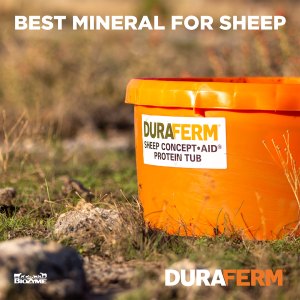
DuraFerm® Concept•Aid® Sheep Protein Tub is also designed to ensure reproductive success. It includes the Concept•Aid sheep mineral package in a 16% natural protein tub.
DuraFerm® ONE Sheep is a free-choice vitamin and mineral supplement for sheep designed to promote performance year-round. It meets or exceeds nutrient requirements throughout the production cycle and is formulated with research-proven organic zinc for enhanced bioavailability.
DuraFerm for Goats
BioZyme makes two products for goats. Once again, both products contain Amaferm, a prebiotic research-proven to increase digestibility.
DuraFerm® Concept•Aid® Goat is a free-choice vitamin and mineral supplement for goats designed to support reproductive success. It contains high levels of vitamin E for reproductive tract repair. This goat supplement supports embryo production and conception using organic trace minerals, including copper, zinc, manganese, and selenium.
DuraFerm® Concept•Aid® Goat Protein Tub contains the Concept•Aid goat mineral package in a 20% natural protein tub.
Get DuraFerm Today
Be proactive in your spring stress management for sheep and goats with quality nutrition from DuraFerm, powered by AO-Biotics Amaferm. DuraFerm products are available through the extensive BioZyme dealer network. Locate a dealer near you today.
Sign up for our newsletter to stay informed about best practices for seasonal sheep and goat nutrition and management.